![[WIP] Podcast logo](https://assets.zyrosite.com/cdn-cgi/image/format=auto,w=375,fit=crop,q=95/Yan01MjyJEH16nVN/black-background-AMqDQ54p9xtwjbqg.png)
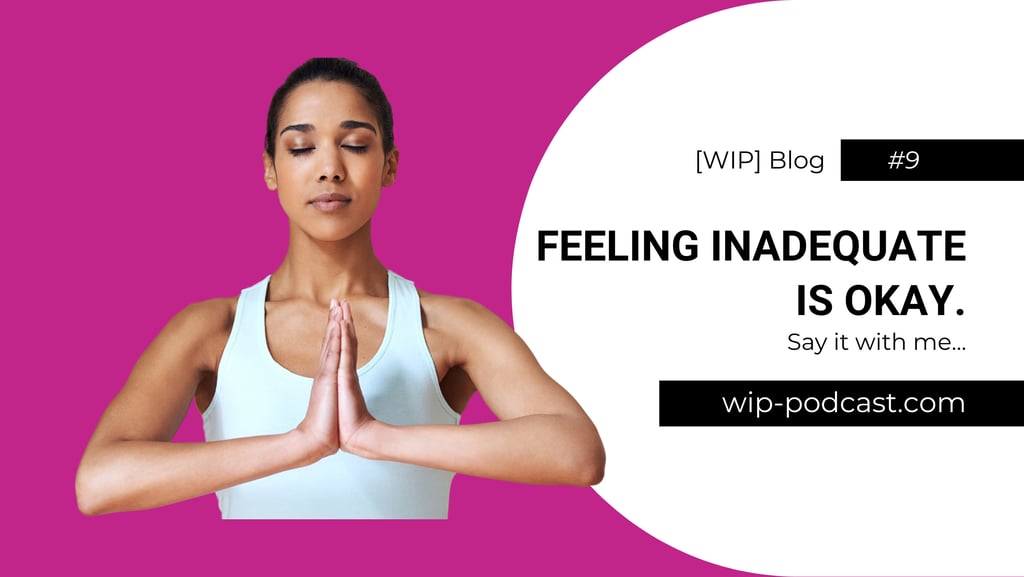
09: Feeling inadequate is okay.
Say it with me...
4/23/20243 min read
If you haven’t heard that working in tech can bring out feelings of inadequacy or imposter syndrome, you may live under a rock. It’s par for the course in engineering. I’ve heard warnings about it hundreds of times since entering tech.
I thought I knew the signs and all the approaches to avoid it.
My “can-do” attitude would never steer me into this void…right?
Yet, here I am, struggling over the last few weeks with where I feel my experience is now and where I feel like I should be or wanted to be at this stage in my overall career and my tech career since transitioning to engineering.
On top of this was the loss of a community last week that I have enjoyed and has uplifted me to engage with other empowering people as an underrepresented person in tech. Women Who Code recently announced the shuttering of the organization. It is a significant blow for women around the globe, myself included.
I want to share 3 resources for identifying and working through these challenges that have recently helped me.
🔗 A link from someone who cares
📨 A well-timed post from a newsletter subscription
🎧 A truly excellent podcast episode
🔗 A link from someone who cares
One of the best ways to work through these challenges is to talk to someone who can hear you, relate, and help you put things into perspective. I’m thankful for the support around me. My partner is patient and kind and grapples with these things, too, as they are well into their tech career and have been here before.
We spoke about this at length, and yesterday, they sent me a link to a post written by Dr Milan Milanović: How to Fight Imposter Syndrome.
An excellent reminder that these challenges have almost limitless variation; they all boil down to feeling some degree of inadequacy. For me, right now, it’s the section “The More You Know, The More You Realize You Don’t Know.”
I hoped to have had more experiences and learned more by this time. As a career changer with 10 years of prior experience, I knew there would be a learning curve, starting at the beginning again has bee hard.
During work hours, I learn between tasks. I read articles and write a lot in my free time to help new knowledge stick. I joined a side project to fill in gaps and push further than I can experience in my workday to accelerate myself.
But learning takes time. And I’m burnt out. After a short break, perseverance is the only option because I won’t give up.
The list of recommendations at the end is an excellent resource for working through these challenges if you’re in this funk, too.
📨 A well-timed post from a newsletter subscription
This week, I received a newsletter in my inbox that was serendipitously timed with these current experiences.
Gregor Ojstersek shared Going from impostor one day to feeling like a superhuman the next day
His post was a great reminder that this will come and go. Even after 10 years in the industry he experiences these challenges!
My biggest takeaway, is that these periods of discomfort are excellent growth opportunities. Identifying this is crucial because you can learn strategies to get through the tough times for long-term improvement.
Everyone feels like an impostor sometimes. It’s a sign that we are growing and learning. What’s really important is that we embrace it and control it so that it doesn’t get to us.
It doesn’t feel great right now, but if we keep going, our destination will most likely surprise us!
Do you want more straight to your inbox?
Subscribe to receive occassional blog posts!
Your contact information will never be sold.
It was initially called the “Imposter phenomenon” in the 1970s research.
Why is this important?
“Syndrome” indicates a long-term experience, whereas a “phenomenon” is short and fleeting. These feelings may come and go, but they are typically short in the grand scheme of the overall experience, and this discomfort won’t last forever.
Additionally, this episode provides many tangible concepts and helps put the typical “imposter syndrome” feelings into perspective. It’s a great listen if you can get to it sooner rather than later—I can’t guarantee the podcast will live on.
Conclusion
Acknowledging and identifying the discomfort is the first step.
Working through the challenges we face is the hardest part.
If we keep going, the efforts are well worth it. And they become more manageable each time the struggles arise as we develop more tools to persevere.
If you’re with me, keep going! I will, too. 🫶
If you’re not here now, return for a read when needed. 🙌
🎧 A truly excellent podcast episode
Although Women Who Code is closing down, I’ve learned a lot from the experiences, including the podcast they’ve run for the last several years—one episode in particular hits home during these times.
“Career Nav #13: Using Conflict Fluency Skills to Create Inclusive Workspaces” with guest Noelle Notermann:
Thanks so much for reading! ✨
Did I miss anything, or would you like to add anything?
Let me know!
I appreciate constructive feedback so we can all learn together. 🙌
Connect
You can find Mindi Weik on these platforms:
mindi@wip-podcast.com
© 2025. All rights reserved.